

Which Pipe Bending Method Is Right for Your Application?
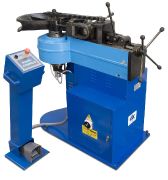
A Practical Guide to Common Tube Bending Methods
Whether you're forming hydraulic lines for aerospace or curved railings for architecture, the ability to bend metal tubing cleanly and consistently is essential. There are several pipe bending methods, each with its own advantages, limitations, and suitable applications. Choosing the right one depends on a mix of factors: material, wall thickness, bend radius, and the function of the finished component.
In this guide, we explore the most widely used tube bending methods, helping you select the best option for your workflow and output goals.
Why Bending Method Selection Matters
If you don’t use the right tube bending processes, you can compromise your material or increase waste through deformation, wrinkling, or ovalisation. Understanding how different methods manage forces, geometry, and tooling helps you avoid problems and achieve the desired bend the first time.
Different materials also behave differently under stress. Thin-wall aluminium might need mandrel support, while thicker mild steel may perform well with a more basic approach. Precision, volume, and bend complexity all influence which bending method is right for the job.
Compression Bending: Simple and Cost-Effective
Compression bending is one of the oldest and most straightforward techniques. A clamp holds the tube or pipe against a static radius former, while a moving arm applies pressure to bend the tube around it.
Ideal for:
● Furniture frames
● Simple railing systems
● General-purpose fabrication
Strengths:
● Low-cost tooling
● Easy to set up and operate
● Suitable for thicker tubing
Limitations:
● Not suitable for tight bends or thin-wall tubes
● Limited control over ovalisation or surface wrinkling
● Less accurate for high-spec applications
This method is beneficial for non-critical shapes where some deformation is acceptable.
Rotary Draw Bending: Precision with Tight Control
Rotary draw bending is the industry standard when high accuracy and repeatability are essential. The tube is drawn around a fixed radius former, typically supported by a pressure former and, where needed, a wiper former to reduce wrinkles on the inner bend surface.
Ideal for:
● Motorsport chassis and roll cages
● Aerospace tubing
● Industrial machinery components
Strengths:
● Highly repeatable
● Supports tight bend radii
● Works with thin-wall tubing and most metals
Limitations:
● More tooling required
● Slower than compression bending
● Less cost effective for one-off or rough work
Rotary draw bending is preferred in sectors where the consistency and finish of bent tubes directly impact performance or safety.
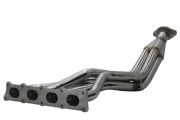
Roll Bending: Large Radii and Gentle Curves
Roll bending is used to produce wide-radius curves over longer lengths. The tube is fed through three rollers that apply incremental pressure to bend it gradually.
Ideal for:
● Architectural arches and circular elements
● Metal sculptures and frameworks
● Construction features
Strengths:
● Excellent for forming sweeping arcs
● Suitable for large diameter tubes
● Low distortion when used properly
Limitations:
● Not suited for tight radii
● Requires multiple passes for full curves
● Limited control over precise bend angles
This method shines where aesthetics or long, flowing bends are needed more than tight, complex forms.
Mandrel Bending: Support for Thin-Walled Tubes
Mandrel bending inserts a flexible rod (mandrel) inside the tube during bending. Combined with rotary draw equipment, this technique helps maintain cross-sectional roundness in thin-wall or soft tubing.
Ideal for:
● Stainless steel exhaust systems
● Hydraulic lines
● High-performance tubular structures
Strengths:
● Prevents collapse and wrinkling
● Maintains internal diameter and finish
● Delivers high accuracy on delicate materials
Limitations:
● More setup time
● Higher tooling cost
● Typically used for repeat production
Mandrel bending is crucial for applications where airflow, fluid dynamics, or precise tolerances are involved.
5. Induction Bending: Heat-Assisted for Heavy Sections
Induction bending uses electromagnetic coils to locally heat a section of tube, making it pliable for shaping. This method is used in heavy-duty or large-scale infrastructure projects.
Ideal for:
● Power station pipework
● Shipbuilding
● Oil and gas installations
Strengths:
● Handles large-diameter, thick-wall tubes
● Smooth bends without internal tooling
● Reduces stress on the material
Limitations:
● Requires specialised equipment
● Not suited for short bends or small tube sizes
● Slower for one-off jobs
While not used daily in most fabrication shops, induction bending is invaluable for critical long-radius work where conventional tooling would fall short.
Conclusion: Matching the Method to the Task
The best tube bending method is the one that meets your technical demands without unnecessary complexity or cost. Compression bending is simple and fast. Rotary draw offers unmatched precision. Mandrel bending protects thin-wall material. Roll bending shapes long, gentle curves. And induction bending handles the heavy stuff with grace.
At Tubela, we supply dedicated equipment for each of these processes. We also offer a wide range of formers, accessories, and expert support to help you get the most from your machines.
FAQs
Which method is best for high-precision work?
Rotary draw bending, especially with mandrel and wiper support, offers the highest accuracy for repeatable, tight-radius work.
Is compression bending suitable for stainless steel?
It can be, but results vary. For a better finish and consistency on stainless, rotary draw or mandrel bending is recommended.
What’s the best method for long, curved structures?
Roll bending is ideal for sweeping curves and large radii, common in architectural and structural applications.
Can thin-wall tubes be bent without distortion?
Yes, using mandrel-assisted rotary draw bending helps maintain roundness and avoids wrinkles or collapse.
Does induction bending require special safety measures?
Yes. The process involves high temperatures and should only be handled with appropriate shielding and trained operators.
Can Tubela help me choose the right machine?
Absolutely. Our team offers impartial advice, demos, and tooling recommendations tailored to your application and materials.
