

The Ultimate Guide to Choosing the Right Pipe and Tube Bender for Your Business
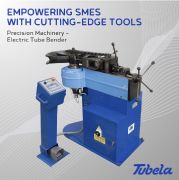
The pipe and tube bender is one of the most crucial tools in any workshop for fabricating pipes and tubes.
Whether you're working in manufacturing, plumbing, automotive, or construction, the ability to bend pipes and tubes with precision is essential for creating high-quality products. However, with so many types of pipe and tube benders available on the market, choosing the right one for your business can be daunting.
At Tubela, we understand the importance of finding the right pipe and tube bender for your needs. This comprehensive guide explains the various types of pipe and tube benders, the key features to consider when choosing one, and how to match the right equipment with your business requirements.
Types of Pipe and Tube Benders
Pipe and tube benders come in various designs, offering different features and capabilities. The primary types of pipe and tube benders are:
1. Manual Pipe and Tube Benders
Manual pipe and tube benders are ideal for smaller workshops or businesses that don’t require high-volume production. These machines are operated by hand, typically with a lever to apply force and bend the pipe or tube. While manual benders offer a cost-effective solution, they require more physical labour and precision from the operator, and the bending process can be slower than automated machines.
Advantages of Manual Benders:
● Cost-effective and budget-friendly
● Simple operation with fewer moving parts
● Ideal for small, one-off projects or low-volume production
Best For:
● Small businesses or workshops with limited budgets
● Applications that require flexibility in bending sizes and shapes
2. Hydraulic Pipe and Tube Benders
Hydraulic pipe and tube benders use hydraulic power to bend the material, making them more efficient and less labour-intensive than manual machines. They are well-suited for medium—to high-volume applications and can handle a broader range of materials, pipe sizes, and bending angles.
Advantages of Hydraulic Benders:
● High power capacity for bending thick materials
● Fast and efficient, increasing productivity
● Less physical effort is required from the operator
Best For:
● Businesses that require higher production capacity
● Applications that involve thicker materials or larger pipe sizes
3. Electric and CNC Pipe and Tube Benders
Electric and CNC (Computer Numerical Control) benders are automated machines that offer precision and efficiency. These benders are controlled via a digital interface, allowing operators to program specific angles, dimensions, and bending radii. CNC pipe and tube benders are perfect for large-scale production runs where consistency and accuracy are paramount.
Advantages of Electric and CNC Benders:
● High accuracy and precision for complex bends
● Fully automated processes, reducing labour costs
● Can handle a wide variety of materials and bending parameters
Best For:
● High-volume production
● Businesses that require intricate and precise bends
● Operations that benefit from automation and consistency
Key Features to Consider When Choosing a Pipe and Tube Bender
Several factors must be considered when selecting the right pipe and tube bender for your business. Below are the most important features to consider before making your purchase:
1. Material Compatibility
Different pipe and tube benders are designed to handle various materials. The material of the pipe or tube you plan to bend will affect the choice of bender you need. Common materials for pipe and tube bending include:
● Steel: Steel pipes require a high power and strength bender, especially for thicker gauges.
● Aluminium: Aluminum is softer and easier to bend, so benders for this material may require less power.
● Stainless Steel: Stainless steel is more challenging and may require a bender with higher force and specialised tooling.
● Copper and Brass: These materials are softer than steel and aluminium but may require specific bending capabilities for a smooth finish.
Before purchasing a bender, ensure it is compatible with the materials you plan to work with. Check the manufacturer's specifications to see if the machine can handle your project's material thickness and bending requirements.
2. Bending Capacity
The bending capacity of a pipe and tube bender refers to the maximum diameter and wall thickness of the material it can bend. Therefore, selecting a bender with the appropriate capacity for your needs is essential.
● Pipe Diameter: Benders come in different sizes, and the maximum pipe diameter a bender can handle depends on the machine's design. If you're working with pipes with a large diameter, choose a bender that can accommodate that size.
● Material Thickness: Different benders have different capacities for handling pipe wall thickness. Heavier, thicker-walled pipes require more power and stronger bending mechanisms.
Ensure that the pipe bender you choose can bend the specific sizes and materials you’ll work with.
3. Bending Angles
Another critical consideration is the bending angle. While some projects may require standard bends, others require specific angles or custom shapes. Look for a pipe bender that offers adjustable or preset bending angles and versatility for achieving more complex bends.
A bender with adjustable settings will allow businesses that need to bend pipes at multiple angles to be more flexible in their production process.
4. Automation Features
Automation can significantly improve efficiency and reduce the potential for human error. For businesses focused on large-scale production, an automated bender can help achieve consistent and precise bends with minimal operator intervention.
● CNC Controls: CNC benders offer full automation, with the ability to input exact specifications for each job. This is ideal for companies needing a high level of precision and consistency.
● Programmable Features: Some benders allow operators to program specific bending parameters, such as angle, speed, and force, making it easier to repeat jobs with the exact specifications.
If your business requires high-volume production or detailed bends, an automated pipe and tube bender will save you time and increase efficiency.
5. Ease of Use
Whether you choose a manual, hydraulic, or CNC bender, you must consider ease of use. Look for a bender with a user-friendly interface, straightforward controls, and simple operation.
● Manual Benders: For manual benders, ensure the setup is straightforward, and the machine can be easily adjusted for different pipe sizes and bending angles.
● Hydraulic Benders: Hydraulic benders should have intuitive controls for adjusting force and speed.
● CNC Benders: CNC benders should have a clear, easy-to-navigate control panel or software that allows you to program different bending tasks quickly.
Choose a bender that matches the level of expertise of your team. If you have experienced operators, more advanced features may be suitable. However, if you have less experienced staff, a more straightforward machine may be more appropriate.
6. Durability and Maintenance
When purchasing a pipe and tube bender, consider the long-term investment. Durable and reliable equipment will save you money on repairs and maintenance costs. Look for benders made from high-quality materials with a reputation for longevity.
Regular maintenance is essential for ensuring that your bender operates efficiently. Some manufacturers offer maintenance packages, ensuring your machine is kept in good condition and ready for heavy use.
7. Budget
Last but certainly not least, budget plays an essential role in choosing the right pipe and tube bender for your business. Manual benders are generally the most cost-effective, while hydraulic and CNC benders come at a higher price point due to their advanced features and capabilities.
However, balancing cost with the capabilities your business requires is important. Investing in a high-quality machine may cost more upfront but will pay off in the long run by improving efficiency and reducing downtime.
Conclusion: Choosing the Right Pipe and Tube Bender for Your Business
Selecting the right pipe and tube bender is essential for any business that relies on pipe and tube bending. Whether you're working with steel, aluminium, or copper, and whether you need a manual bender for small jobs or a CNC bender for high-volume production, Tubela offers a wide range of options designed to meet your needs.
When selecting the proper bender, consider the material compatibility, bending capacity, bending angles, automation features, and ease of use. By understanding these factors and matching them with your business requirements, you’ll ensure that your pipe and tube bending operations are efficient, accurate, and cost-effective.
If you’re ready to take your pipe and tube bending to the next level, Tubela offers the tools and expertise to help you choose the right machine.
Contact Tubela today to learn how our range of products can transform your metalworking operations.
Invest in Tubela today to ensure the success and sustainability of your operations.
For more information on how Tubela’s machines can benefit your projects, contact us at (0)1371 859 100 and explore the extensive range of tube and pipe-bending machines designed to meet your industry's unique needs.
Follow our LinkedIn page for up-to-date news articles and more!
https://www.linkedin.com/in/tubela-tubebending-23a40a39/
FAQs: How to Choose the Right Pipe and Tube Bender for Your Business
- What types of pipe and tube benders does Tubela offer? Tubela offers a variety of pipe and tube benders, including manual, hydraulic, and CNC-controlled models. Each type is designed to meet different production needs, from small-scale, custom jobs to large-scale, high-volume operations.
- Which type of bender is best for small businesses? Manual pipe and tube benders are an affordable and cost-effective choice for small companies or low-volume operations. They are suitable for one-off projects or flexible bending sizes and shapes but require more manual effort.
- What materials can Tubela's benders handle? Tubela’s benders are compatible with various materials, including steel, stainless steel, aluminium, copper, and brass. The type of material you plan to bend will influence your choice of bender, as different materials require different levels of power and force.
- How do I determine the bending capacity I need? The pipe diameter and wall thickness determine the bending capacity. Working with larger pipes or thicker materials requires a bender with higher power capacity and greater bending range. Select a machine that matches the dimensions and materials you work with.
- What are the benefits of a hydraulic pipe and tube bender? Hydraulic benders are powerful and efficient, ideal for medium—to high-volume production. They are particularly effective for handling thicker materials and larger pipe sizes while reducing the physical effort required from the operator.
- How precise are CNC pipe and tube benders? CNC benders are highly precise, offering consistent and accurate results for complex bending tasks. With programmable settings, CNC machines can handle intricate bends with high accuracy, making them perfect for high-volume production with tight tolerances.
- Can I adjust the bending angles on Tubela’s benders? Yes, Tubela’s benders allow for adjustable bending angles, making handling both standard and custom bends easy. Whether you need specific or complex angles, our machines can be programmed to meet your requirements.
- How does automation improve pipe and tube bending? Automation features, particularly in CNC benders, allow for precise control of the bending process, minimising human error and increasing production efficiency. Automated machines enable high-volume production with minimal operator intervention, saving time and labour costs.
- What factors should I consider when selecting a pipe and tube bender? Key factors include material compatibility, bending capacity, bending angles, automation features, and ease of use. Before choosing a bender, consider your business needs, such as production volume and the complexity of your bending requirements.
- How do I ensure that my bender is durable and requires minimal maintenance? Tubela offers machines built with high-quality materials that ensure durability and long-term performance. Regular maintenance is essential to keeping your bender in optimal condition, and Tubela provides maintenance packages to keep your machine
