

Choosing the Right Pipe and Tube Bender for Your Application
What to Consider When Selecting a Pipe and Tube Bender
Pipe and tube bending is a core requirement in many sectors, from fabrication shops and motorsport workshops to industrial plants and architectural metalwork. A reliable pipe and tube bender ensures not just efficiency, but repeatability and safety. These are critical factors for businesses handling structural or high-pressure applications.
With so many options on the market, identifying the right bender can feel complex. This guide walks through the practical considerations of choosing a suitable machine, looks at different bending needs across sectors, and outlines why Tubela remains a trusted name in manual bending solutions.
Understanding the Role of Manual Benders
A tube and pipe bender is more than a simple tool. It is a fundamental asset that enables users to shape metal accurately, maintain tolerances, and meet technical specifications without excessive rework. While powered CNC machines serve large-scale production, hand-operated models are still the go-to for many professionals seeking portability, control, and cost-efficiency.
At Tubela, our range of hand benders has been developed to meet a wide spectrum of industry demands. Whether you are working on a race chassis or fabricating railings, the principles remain the same: precision, durability, and ease of use.
Key Factors When Selecting a Pipe and Tube Bender
1. Tube Material and Size
Before choosing any bender, it is essential to determine the material type and its outer diameter and wall thickness. This can range from aluminium and stainless steel, to copper or mild steel. Different materials respond differently under pressure, so a tool that works well on soft copper may underperform on stainless steel unless equipped with suitable tooling.
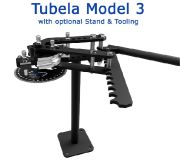
Tubela’s hand benders, including the popular Model 3 and Model 32, are compatible with a range of sizes and come with dedicated tooling sets for each material profile. This ensures clean bends without rippling or flattening.
2. Radius Requirements
The centreline radius (CLR) you need will affect your choice of bender. For example, tight bends in limited space require a machine that can support small CLR formers without compromising material integrity. Larger radius curves benefit from a longer sweep and consistent control over pressure distribution.
Tubela offers interchangeable formers for different CLR requirements, allowing one machine to serve multiple projects.
3. Frequency of Use
A hobbyist requiring occasional bends might prefer a simple manual kit. A professional workshop will need a robust, repeatable system that handles high usage. Tubela’s benders are engineered for longevity and ease of maintenance, with steel and cast components built for intensive, daily use.
4. Portability vs. Stability
Some sites require the bender to be portable, such as on-site construction, maintenance operations, or mobile fabrication units. Others benefit from fixed, bench-mounted units that prioritise stability and mechanical advantage.
Hand benders like the Tubela Model 3 offer a good balance, being compact and portable while delivering the stability needed for accurate bends.
5. Versatility and Compatibility
One key advantage of investing in a Tubela unit is the modular tooling system. You are not locked into one material size or shape. Whether you need to bend 1” steel for roll cages or 22mm copper for bespoke plumbing, Tubela’s benders adapt with the right formers and guides.
Compatibility with square or rectangular profiles is also possible with dedicated accessories. This is ideal for architectural applications or furniture manufacturing.
Typical Applications of Manual Pipe and Tube Benders
Motorsport and Automotive Fabrication
In motorsport, precise bending is essential for fabricating roll cages, suspension systems, and chassis frameworks. Tubela’s benders are widely used in performance engineering environments where strength, accuracy, and compliance with motorsport regulations are non-negotiable.
Architectural and Structural Metalwork
Hand benders play a central role in creating curved metal elements for staircases, balustrades, railings, and canopy supports. Whether working with mild steel or stainless, Tubela’s tools allow fabricators to deliver clean, repeatable results in structural and decorative applications.
Medical and Laboratory Equipment Manufacturing
Tubela’s manual benders are trusted for their ability to produce precise, hygienic bends in stainless steel and aluminium tubing. These are often used in the manufacture of hospital beds, trolleys, surgical frames, and other essential equipment where performance and cleanliness standards are critical.
Aerospace and Aviation Components
The aerospace sector frequently requires tube bending for hydraulic lines, lightweight frames, and support structures. The precision demanded in these applications makes manual benders an essential workshop tool for both prototyping and production work.
Custom Fabrication and Prototyping
R&D departments and prototyping teams rely on manual benders for one-off builds, experimental rigs, and low-volume production runs. Tubela’s flexibility and tooling range make it easy to adjust bend angles and tube types to meet changing requirements.
Industrial Machinery and Plant Maintenance
Industrial teams use manual benders for maintaining and modifying plant machinery, fabricating guards, brackets, and pipework frameworks on-site. Portability, combined with mechanical strength, makes hand benders a practical choice for field-based engineering teams.
Why Choose Tubela?
With over 80 years of experience in the industry, Tubela Engineering Co. Ltd. has refined its product line to deliver reliable performance across disciplines. We manufacture our machines and tooling in the UK, prioritising both sustainability and engineering excellence. Our expert team offers impartial advice, in-person demonstrations, and tailored tooling packages to meet even the most niche specifications.
Each bender is backed by a knowledgeable support network, and our parts are locally sourced wherever possible. This minimises environmental impact and ensures continuity of supply.
Whether you are buying your first pipe and tube bender or upgrading your current setup, Tubela delivers tools you can rely on, with the technical backing to match.
FAQs
What size tubes can Tubela’s manual benders handle?
Our hand benders support tube sizes from small-diameter 10mm up to 76mm OD, depending on the model and tooling used.
Can these benders be used for square tubing?
Yes. With optional square tooling kits, Tubela benders can handle square and rectangular profiles. This is ideal for architectural or structural applications.
Are Tubela benders suitable for stainless steel?
Absolutely. Our benders are designed to work with stainless steel, though it is important to use the correct former and ensure appropriate lubrication during the bend.
What is the difference between the Model 3 and Model 32?
The Model 3 is compact and ideal for small-to-medium applications. The Model 32 offers enhanced leverage and capacity for larger projects and thicker-walled tubing.
Can I order custom formers for specific CLR requirements?
Yes. Tubela manufactures bespoke tooling including custom-radius formers to match your project requirements precisely.
Do you provide after-sales support and training?
Yes. We offer expert guidance, spare parts, and optional demonstrations at our site in Essex to ensure you get the most from your equipment.
